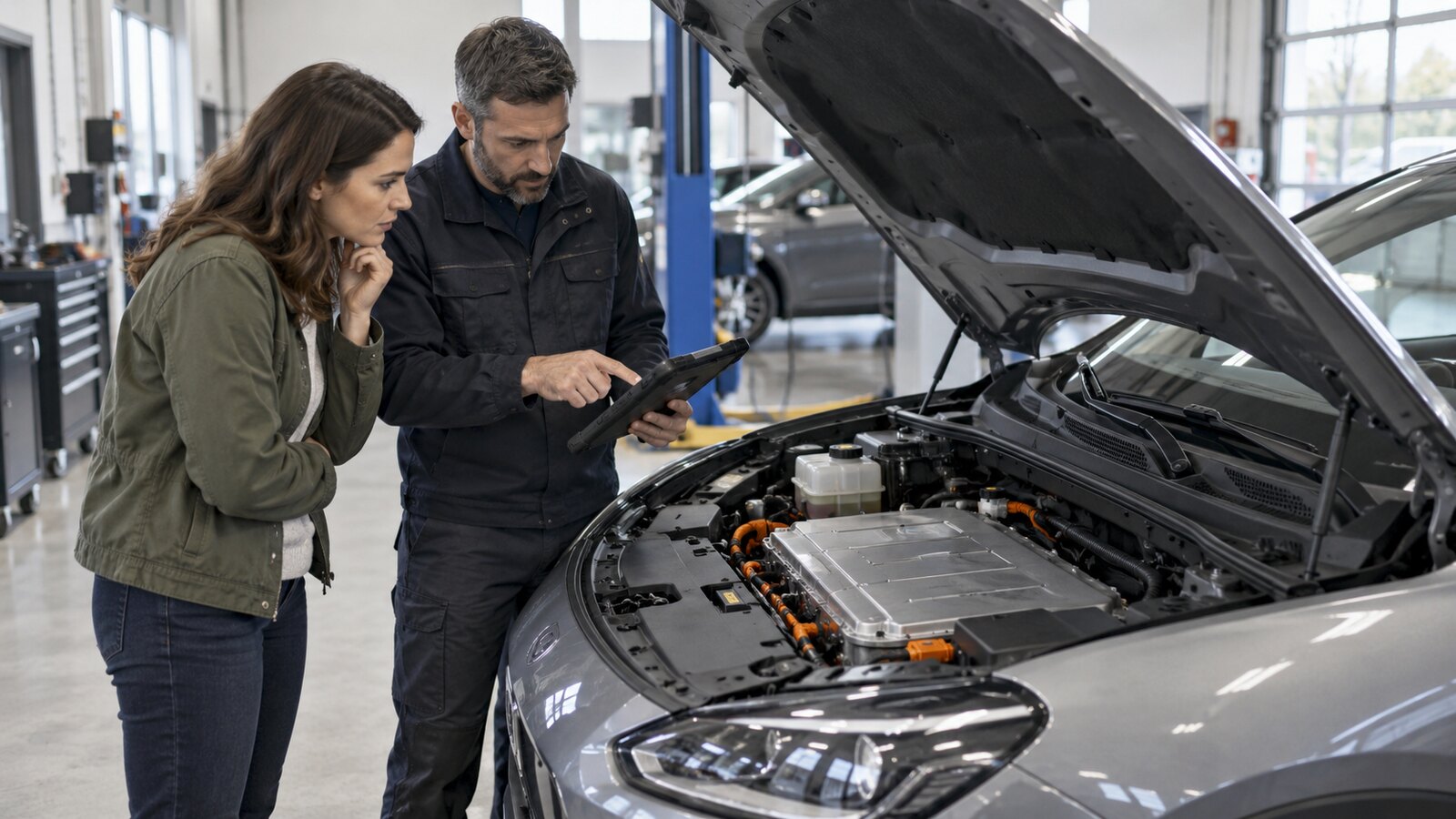
Mileage alone does not describe a used electric vehicle. Battery condition, climate history, charging behavior, software, repair history, tires, warranty status, and access to compatible charging all affect value.
Battery condition evidence
Ask for available battery state-of-health information, diagnostic reports, service records, displayed range under known conditions, and any battery repair or replacement history. Dash range alone is an estimate.
Compare usable energy or range with model expectations while accounting for temperature, recent driving, tires, speed, and software. Manufacturer diagnostics may be more reliable than a generic scanner.
Charging test and compatibility
Confirm the included cable or equipment, AC charge function, DC fast-charge capability, connector type, charge-port condition, and any adapters. Observe a charging session when practical.
Older models may charge slowly or use less common connectors. Map the infrastructure relevant to home, work, and routine travel.
Warranty, recalls, and repairs
Verify the original in-service date, battery and powertrain warranty terms, capacity thresholds, transfer requirements, exclusions, and remaining coverage with the manufacturer.
Check the VIN for open recalls and review collision, flood, title, and repair history. High-voltage or structural damage warrants specialist evaluation.
Price and ownership costs
Compare tires, suspension, brakes, cabin systems, insurance, registration, charging, expected repairs, depreciation, and financing—not just energy savings.
IRS guidance states the previously owned clean vehicle credit is unavailable for vehicles acquired after September 30, 2025. Verify any current state, local, utility, or dealer program separately.
Decision checklist
- Request battery health evidence
- Test AC and DC charging
- Verify warranty by VIN
- Check recalls and title history
- Get an independent inspection
- Price insurance and likely repairs
Frequently asked questions
Is displayed range proof of battery health?
No. It changes with recent driving, climate, settings, and estimation methods.
Can a used EV bought in 2026 receive the former federal used clean vehicle credit?
IRS guidance says the credit is unavailable for vehicles acquired after September 30, 2025.
Sources and further reading
General U.S. consumer education only. Prices, availability, policies, laws, incentives, and individual needs change. Verify current terms directly with the provider or relevant government agency before purchasing or traveling.