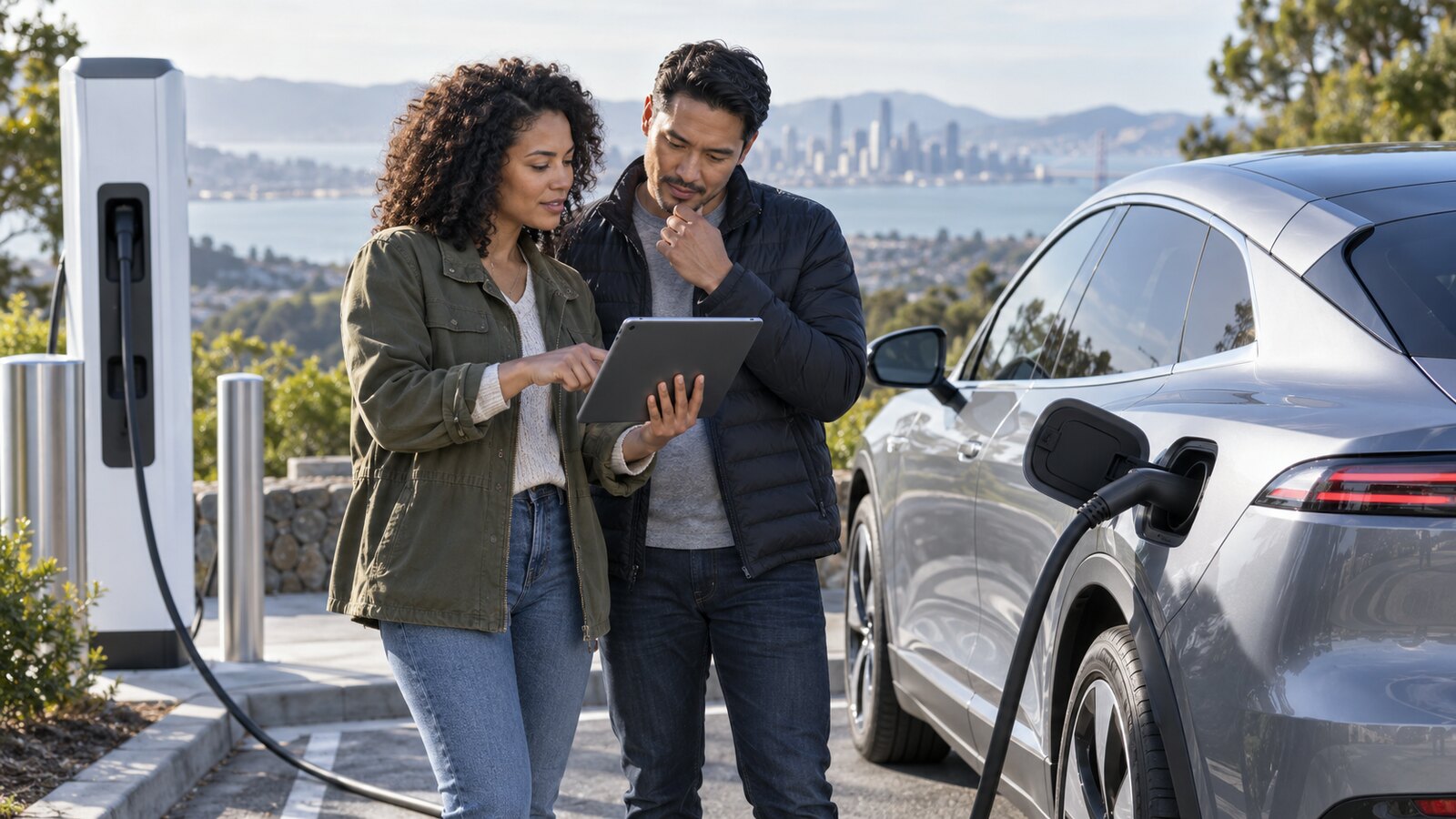
An electric vehicle should be matched to a household’s driving and charging pattern rather than selected from maximum advertised range alone. Home access, climate, road-trip routes, efficiency, insurance, and depreciation can matter more.
Start with real driving
Review typical daily miles, longest regular trip, winter or hot-weather use, highway share, elevation, towing, passenger load, and how often the vehicle sits. Range varies with conditions and use.
A larger battery can provide flexibility but may cost and weigh more. Choose enough margin for realistic conditions rather than treating the rated range as guaranteed.
Home and public charging
Most EV owners do much of their charging at home. Confirm parking access, electrical capacity, installation permission, charger location, utility rates, and charging schedule.
For road trips, check compatible connectors, station reliability, charging speed curve, route alternatives, and the effect of cold weather or towing. Peak advertised charge rate is not maintained throughout a session.
Total ownership cost
Compare purchase price, financing, electricity, public fast charging, insurance, registration, tires, maintenance, depreciation, and expected resale. Incentives change and should be verified at purchase.
As of 2026, IRS guidance states that the federal new and previously owned clean vehicle credits are not available for vehicles acquired after September 30, 2025. State, local, utility, or charging incentives may differ.
Warranty and usability
Read battery capacity, high-voltage component, vehicle, roadside, and corrosion warranties. Warranty duration does not guarantee a particular resale value or eliminate normal degradation.
Test seating, cargo, controls, driver-assistance behavior, visibility, ride, noise, phone integration, and charging-port placement.
Decision checklist
- Measure real daily and trip mileage
- Confirm dependable charging
- Compare efficiency, not range alone
- Price insurance before purchase
- Read battery warranty terms
- Verify current incentives independently
Frequently asked questions
Does every EV qualify for a federal purchase credit in 2026?
No. IRS guidance states the new and previously owned clean vehicle purchase credits ended for vehicles acquired after September 30, 2025.
Is the longest-range EV always best?
No. Charging access, efficiency, price, size, climate, and driving pattern can be more important.
Sources and further reading
General U.S. consumer education only. Prices, availability, policies, laws, incentives, and individual needs change. Verify current terms directly with the provider or relevant government agency before purchasing or traveling.