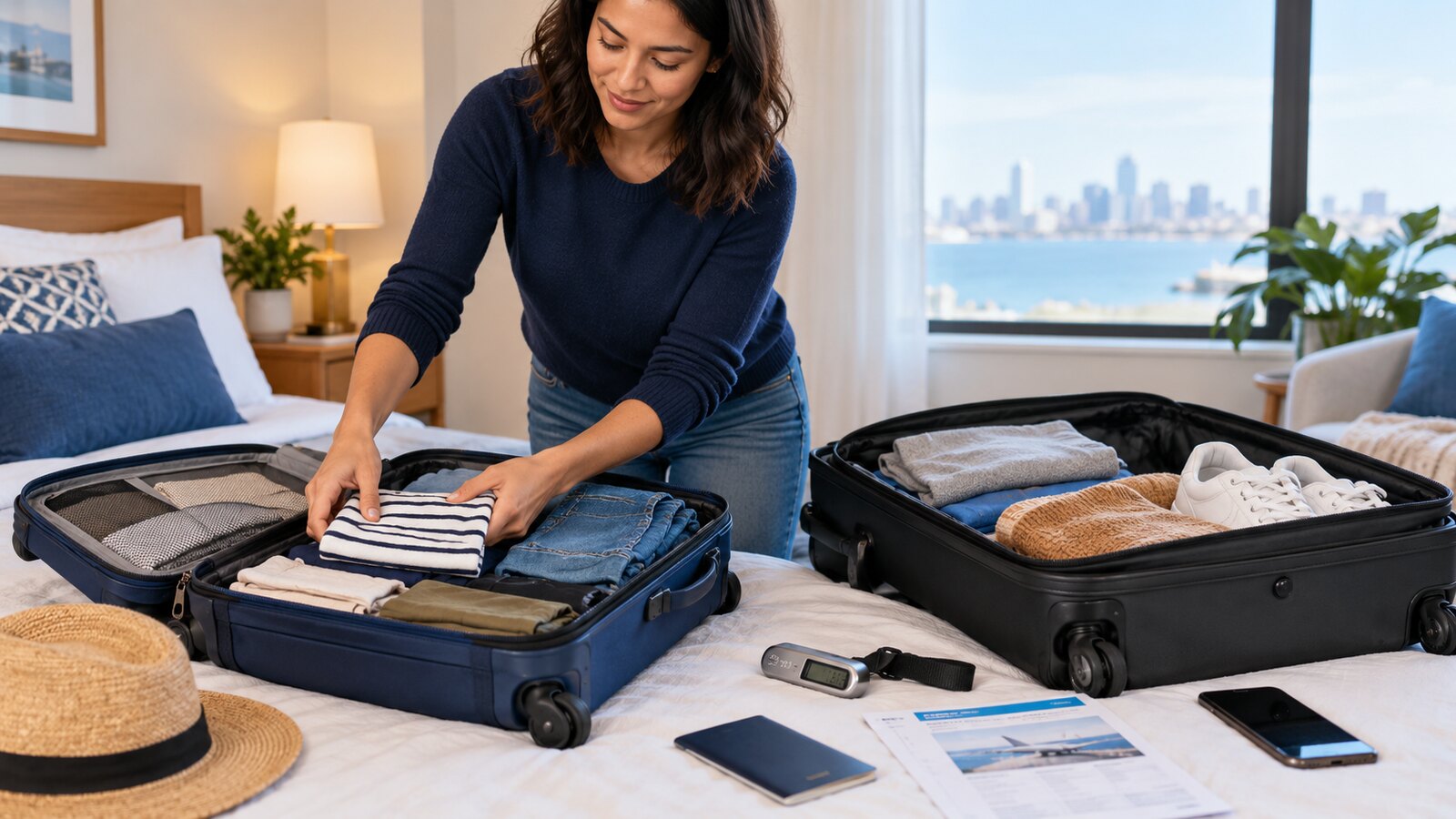
The lowest airfare is not always the lowest trip cost. Baggage fees, size limits, fare restrictions, connections, and the value of items packed can change whether carry-on or checked baggage is more practical.
Calculate the complete cost
Compare fees for each direction, traveler, and bag. Basic or restricted fares may handle carry-on bags differently, while status or card benefits may waive specified charges.
Measure dimensions including wheels and handles and weigh bags before leaving. Gate-check charges and overweight fees can materially change the total.
Connection and delay risk
Short connections, separate tickets, and itinerary changes can raise mishandling risk. Keep medication, documents, keys, electronics, chargers, and one change of essential clothing in the cabin.
Do not place prohibited or irreplaceable items in checked baggage. Review TSA and carrier restrictions for batteries, liquids, tools, sporting equipment, and special items.
Protect and identify baggage
Use durable identification inside and outside the bag without displaying unnecessary personal information. Photograph the bag and contents and retain receipts for high-value items when practical.
Remove old routing tags and confirm the destination tag at check-in. A tracking device can provide information but does not replace the airline’s reporting process.
When a bag is delayed or lost
Report the problem before leaving the airport when possible and obtain a reference number. Ask about delivery, interim expenses, receipts, deadlines, and status updates.
Liability limits and claim procedures differ between domestic and international travel. Insurance and credit-card benefits may require prompt carrier documentation.
Decision checklist
- Compare round-trip baggage cost
- Measure and weigh every bag
- Keep essentials in the cabin
- Photograph checked luggage
- Retain tags and receipts
- Report problems immediately
Frequently asked questions
Are carry-on bags always free?
No. Allowances depend on carrier, fare, route, and item size.
Should medication be checked?
Essential medication is generally safer in accessible cabin baggage, subject to security and destination rules.
Sources and further reading
General U.S. consumer education only. Prices, availability, policies, laws, incentives, and individual needs change. Verify current terms directly with the provider or relevant government agency before purchasing or traveling.