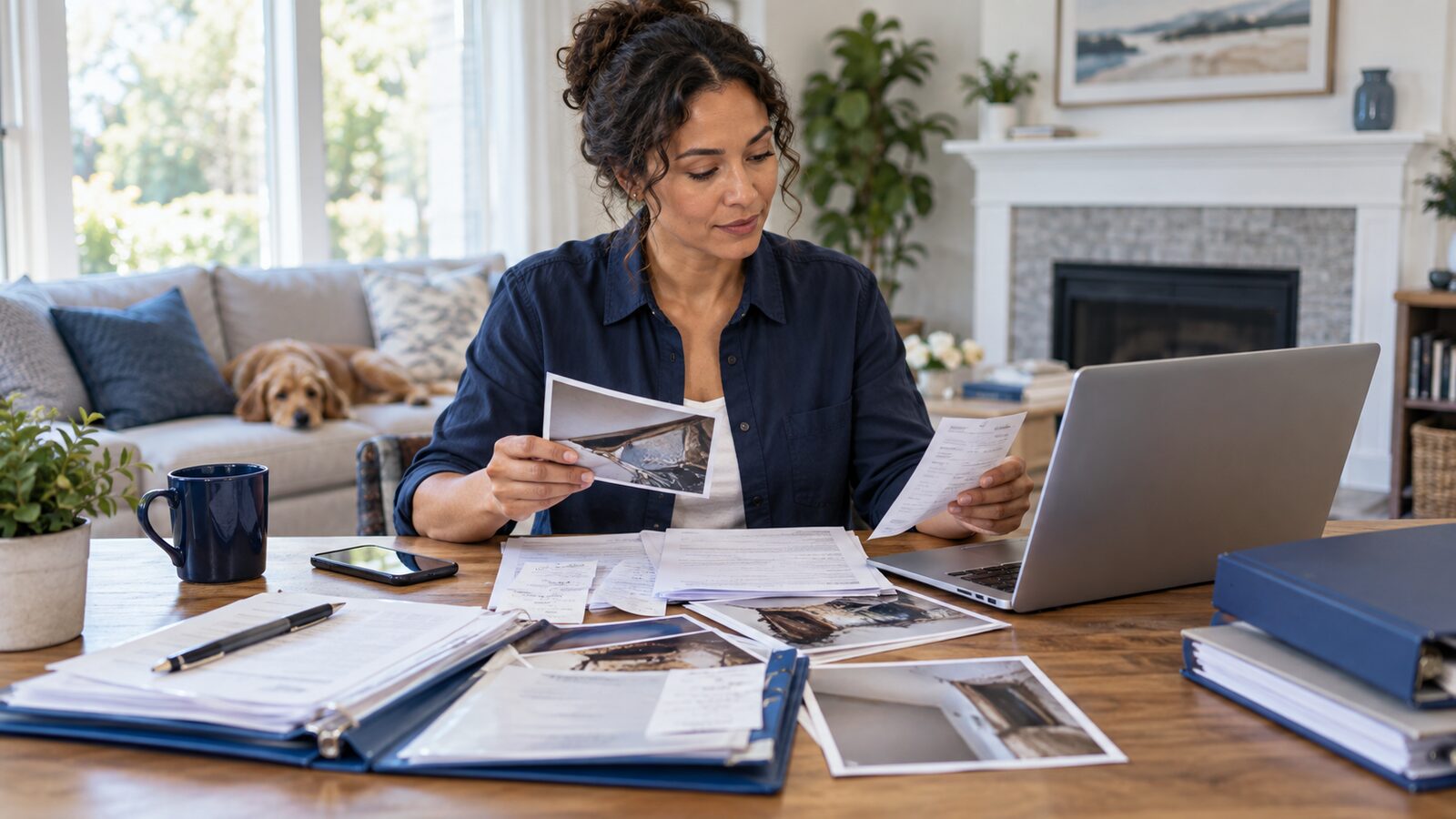
A strong claim file does not guarantee payment, but accurate, organized documentation helps an insurer evaluate coverage, cause, scope, and value.
Create a loss timeline
Record when the event occurred or was discovered, immediate protective actions, reports, insurer notice, inspections, repairs, treatment, and major communications. Separate known facts from estimates or assumptions.
For continuing damage, document changes over time and reasonable steps taken to prevent additional loss.
Photographs, inventories, and ownership
Take wide and detailed photos before cleanup when safe. Preserve original files and metadata. A property inventory can list description, age, condition, purchase information, and replacement research.
Receipts are helpful but not always the only proof of ownership. Photos, manuals, statements, registrations, and witness information may also be relevant.
Costs and professional records
Keep estimates, invoices, canceled checks, rental costs, towing charges, medical bills, work-loss documents, and expert reports. Ask whether emergency work or major repairs require approval.
For health or injury claims, preserve explanations of benefits and distinguish billed amounts from allowed amounts and actual patient responsibility.
Communication discipline
Use the claim number, note dates and participants, summarize important calls, and save letters and portal messages. Answer accurately and correct misunderstandings promptly.
Do not submit altered documents or inflate a claim. Fraud can create coverage, civil, and criminal consequences.
Practical checklist
- Start a dated timeline
- Preserve original photos and files
- Create a detailed inventory
- Save every expense record
- Track insurer requests and responses
- Back up the claim file securely
Frequently asked questions
Must every item have a receipt?
Not always, but proof requirements vary. Provide the best reliable evidence available and ask the adjuster what alternatives are accepted.
Should damaged property be discarded?
Ask the insurer before disposal unless safety or law requires immediate action. Photograph and document anything that must be removed.
Can a claim call be recorded?
Recording laws vary by state. Obtain legal guidance or consent rather than assuming it is permitted.
Sources and further reading
This article provides general educational information for a U.S. audience. It is not insurance, legal, medical, tax, investment, or financial advice. Policy language, state law, and individual facts control actual outcomes.