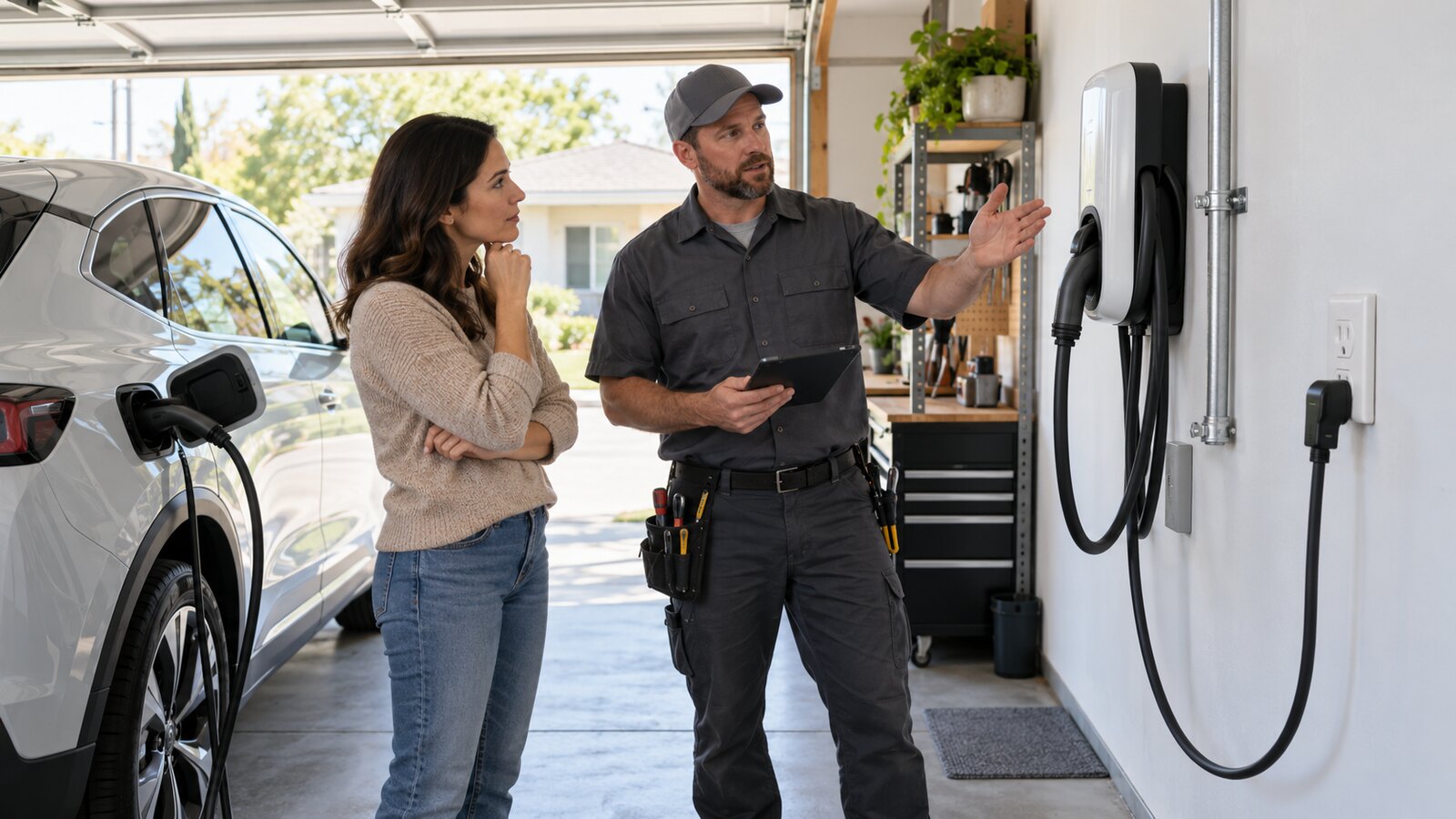
Home charging is often the central convenience of EV ownership, but the right equipment depends on daily mileage, parking, electrical capacity, utility rates, vehicle capability, and local permitting.
Level 1 and Level 2
Level 1 uses a standard lower-power household supply and can be sufficient for modest daily mileage when the car remains parked for long periods. Recovery after a long trip is slower.
Level 2 uses a 240-volt circuit and commonly replenishes more range overnight. Vehicle onboard-charger limits determine how much power the car can accept.
Electrical and installation planning
A qualified electrician can evaluate panel capacity, load calculations, circuit rating, cable route, outlet or hardwired equipment, weather exposure, and code requirements.
Long wire runs, trenching, detached garages, service upgrades, permits, and load-management equipment can materially change cost. Obtain itemized quotes.
Electricity rates and scheduling
Estimate kilowatt-hours from annual miles and vehicle efficiency, then apply local energy charges, time-of-use rates, taxes, and fees. Charging losses mean wall energy can exceed battery energy.
Scheduled off-peak charging may lower cost where the utility offers a suitable plan, but examine the effect on all household electricity use.
Equipment and safety
Use equipment certified for the intended location and follow manufacturer instructions. Consider cable reach, connector compatibility, network dependence, warranty, service, outdoor rating, and access control.
Do not rely on an extension cord or improvised wiring. Stop using damaged equipment and seek qualified inspection after overheating, impact, flooding, or electrical concerns.
Decision checklist
- Estimate overnight energy need
- Confirm panel capacity
- Obtain itemized electrician quotes
- Check permits and utility rules
- Compare off-peak rate plans
- Choose certified compatible equipment
Frequently asked questions
Does every EV owner need Level 2 charging?
No. Level 1 can work for some low-mileage routines, while others need faster overnight recovery.
Is a home charger tax credit always available?
No. Eligibility, location, timing, and law change; verify current IRS and local guidance before relying on an incentive.
Sources and further reading
General U.S. consumer education only. Prices, availability, policies, laws, incentives, and individual needs change. Verify current terms directly with the provider or relevant government agency before purchasing or traveling.