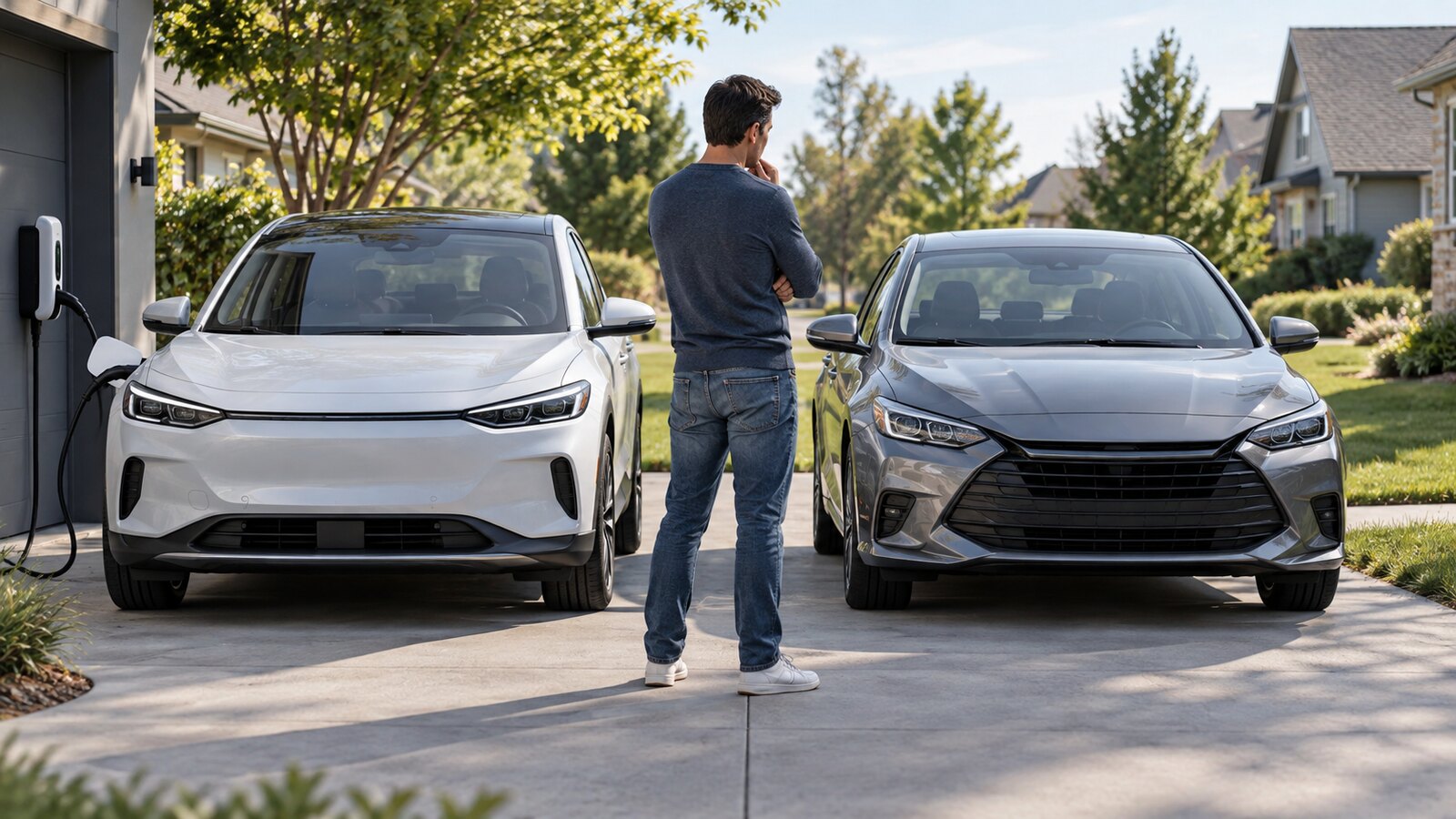
Battery-electric, plug-in hybrid, and conventional hybrid vehicles solve different problems. The best fit depends on charging access, trip length, climate, fuel and electricity prices, cargo needs, towing, and how consistently the vehicle will be plugged in.
How the powertrains differ
A battery-electric vehicle uses electric motors and a rechargeable traction battery without a gasoline engine. A conventional hybrid combines an engine and electric assistance but is not plugged in.
A plug-in hybrid has a larger rechargeable battery for a limited electric range plus an engine for longer operation. Its real efficiency depends heavily on charging frequency and trip pattern.
Charging and daily routine
Home charging can make a battery-electric vehicle convenient because it starts many days with planned energy. Apartment, street, or irregular parking can make public infrastructure more important.
A plug-in hybrid that is rarely charged may carry battery weight while relying mainly on gasoline. A conventional hybrid can suit drivers who cannot plug in.
Long trips and climate
Charging-stop duration, station location, weather, highway speed, elevation, towing, and cabin heating affect electric road trips. Route planning can reduce uncertainty.
Hybrids and plug-in hybrids can refuel quickly with gasoline, but they retain engine maintenance and emissions. Individual models differ substantially.
Costs and maintenance
EVs eliminate oil changes and some engine components, but tires, brakes, suspension, cooling systems, cabin filters, and repairs remain. Insurance and depreciation vary by model.
Compare energy cost per mile using local prices and realistic efficiency. Include charger installation, public charging, maintenance, registration, and financing.
Decision checklist
- Confirm regular charging access
- Map frequent long trips
- Compare local energy prices
- Review climate and towing needs
- Price insurance by exact model
- Test all candidate powertrains
Frequently asked questions
Does a plug-in hybrid need to be charged?
It can usually operate on gasoline, but regular charging is important to obtain the intended electric-driving benefit.
Are EVs maintenance free?
No. They avoid some engine services but still require tires, brakes, fluids or cooling service, inspections, and repairs.
Sources and further reading
General U.S. consumer education only. Prices, availability, policies, laws, incentives, and individual needs change. Verify current terms directly with the provider or relevant government agency before purchasing or traveling.